
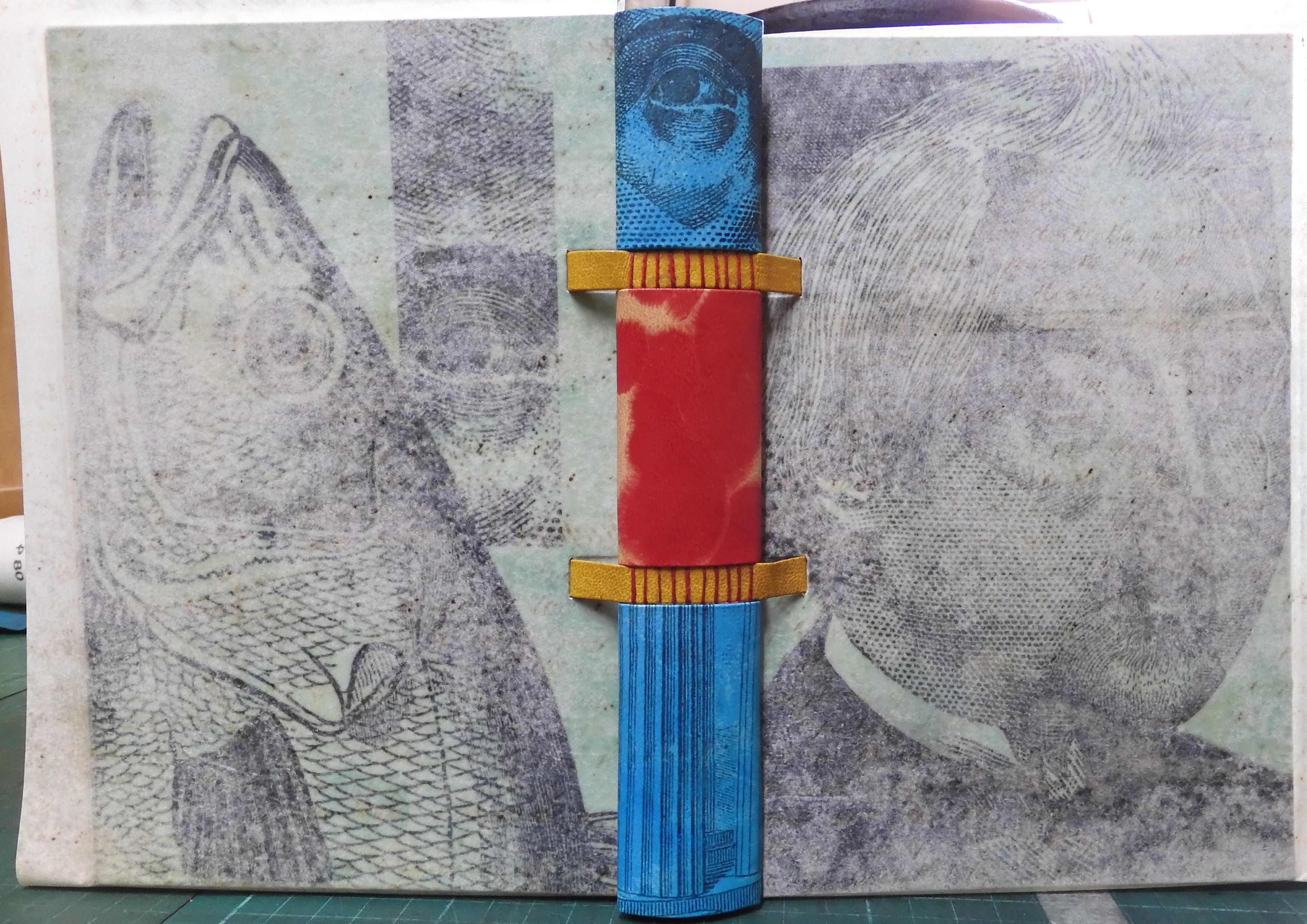
Vladimir Nabokov, Pale Fire (Weidenfeld and Nicolson, 1962). Bound by Mark Cockram, 2025.
Bookbinder's Statement
As a painter gathers inspiration from landscapes, emotions, people, places and mood, I, as a creative bookbinder, assemble my inspiration from the text of any given book. First steps are to read, research and re-read. Highlighting text that either gives me very clear images or narratives. I respond to the landscapes, emotions, people, places and mood that the author creates, and so it was with Pale Fire.
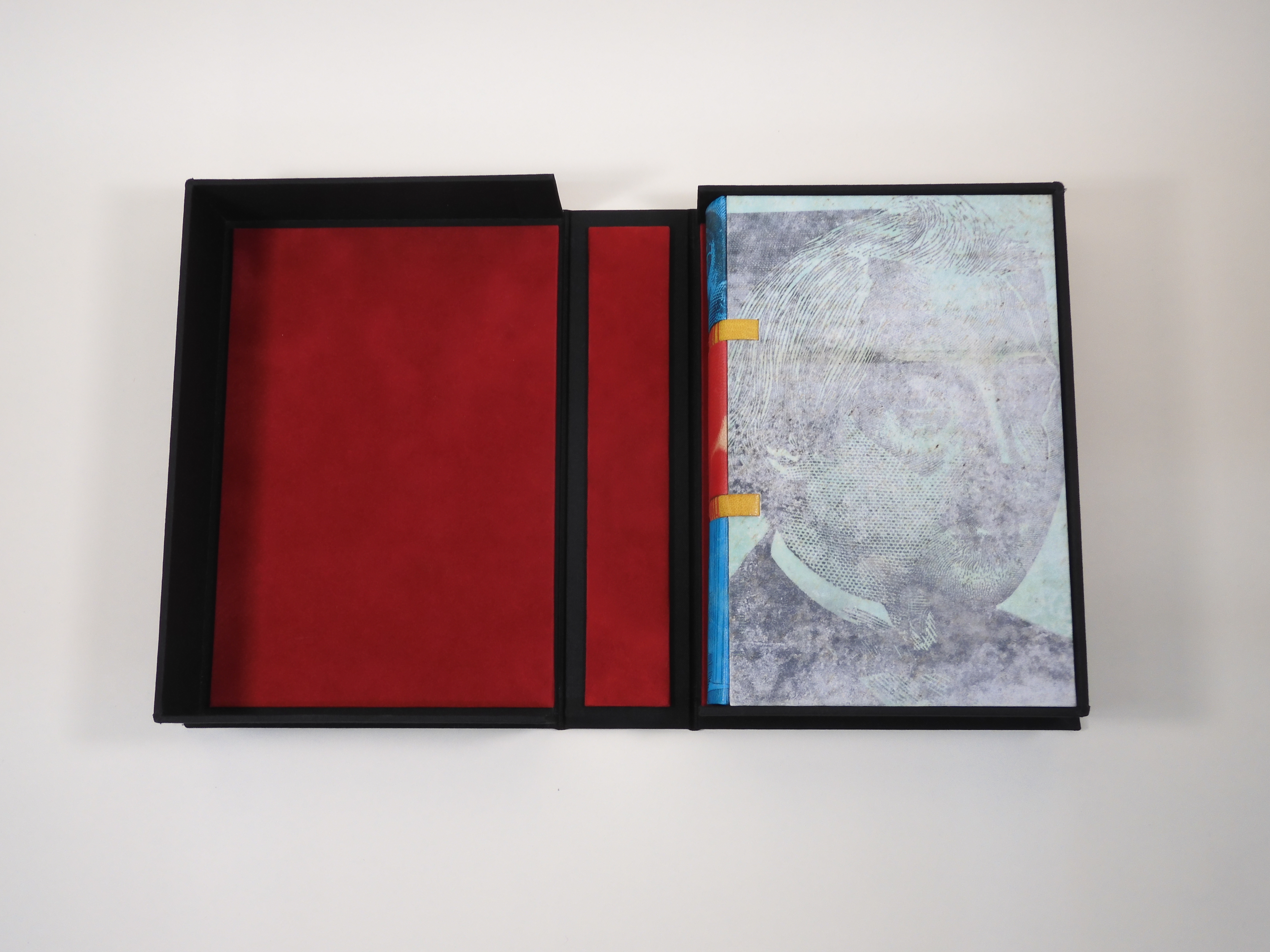
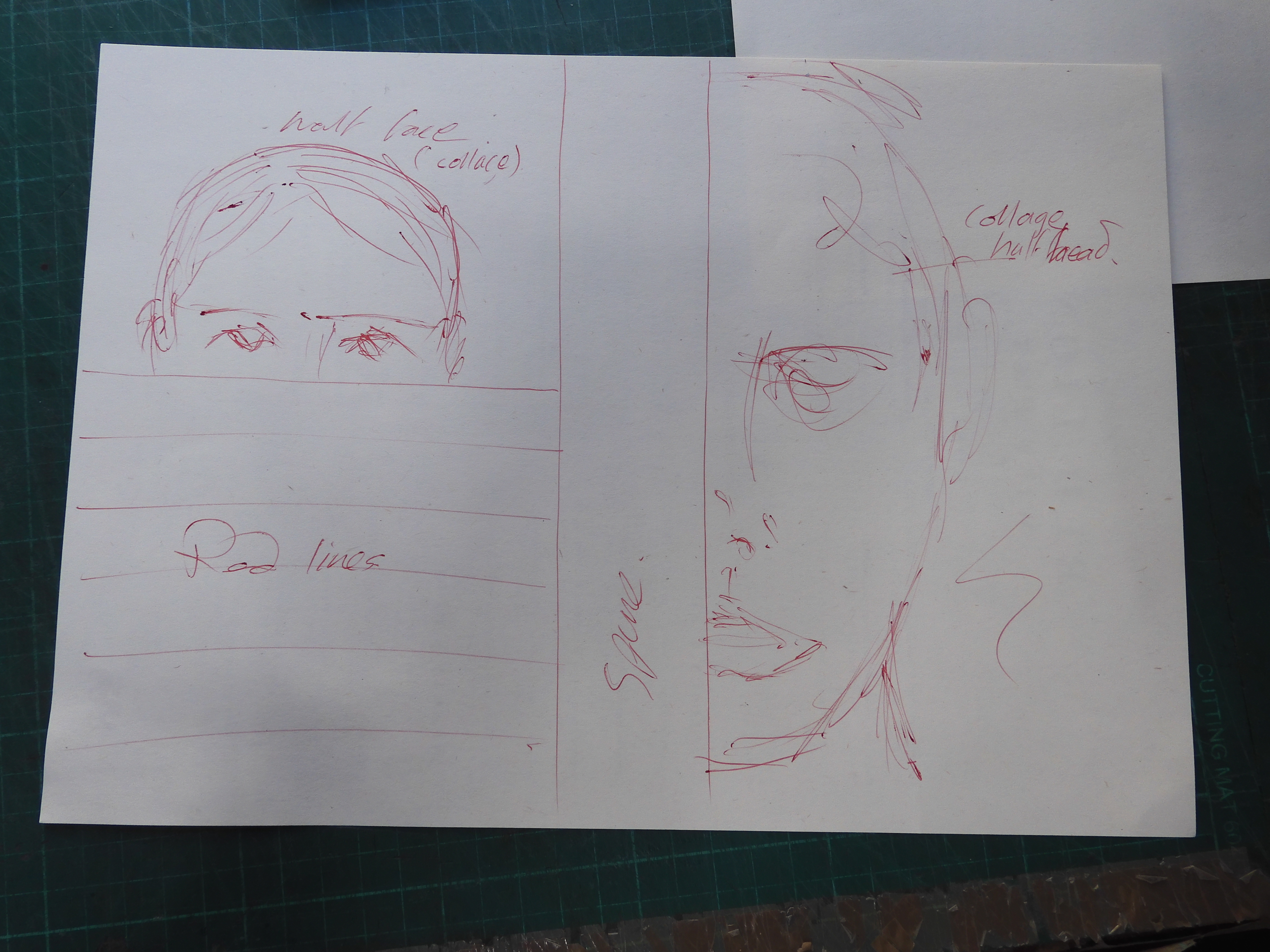
Pale Fire contains the poem ‘Pale Fire’ by the fictional poet John Shade, enveloped by a foreword and extensive commentary by his supposed friend and admirer, Charles Kinbote. The two texts overlap, diverge, complement and rival each other. With so many layers of perspectives and distortions, each and all creating rich, complex and deep narratives that weave through the text, Pale Fire gave me with so many options regarding the design, style, colour and technical finish that in some ways there were too many ideas cramming my note book and so began the process of finding the elusive final binding somewhere in my notes and mind’s eye.
To the spine of the binding, we see three panels separated by an exposed sewing technique, evoking the idea of two sets of texts, both joined and exposed. The middle panel suggests Shade’s blood (shed at the end of the novel), which splatters onto and separates the upper and lower panels. In the upper panel we see a stylised or "borrowed" eye from a Victorian print (the frontispiece from a generic Collected Works of Shakespeare), while the lower panel, a classical Greek column, defines the foundation or basis of the text, alluding to Shakespeare's play Timon of Athens. The quote “The moon’s an arrant thief, / And her pale fire she snatches from the sun”, from Timon of Athens (Act IV, scene 3) is used as both the title of the novel and the title of Shade's poem within the work. The title creates a mind picture, the sunlight being creation and inspiration, with the moon stealing light from the sun, perhaps akin to an artist or author borrowing from existing works whose original intentions are twisted and re-configured into new texts.
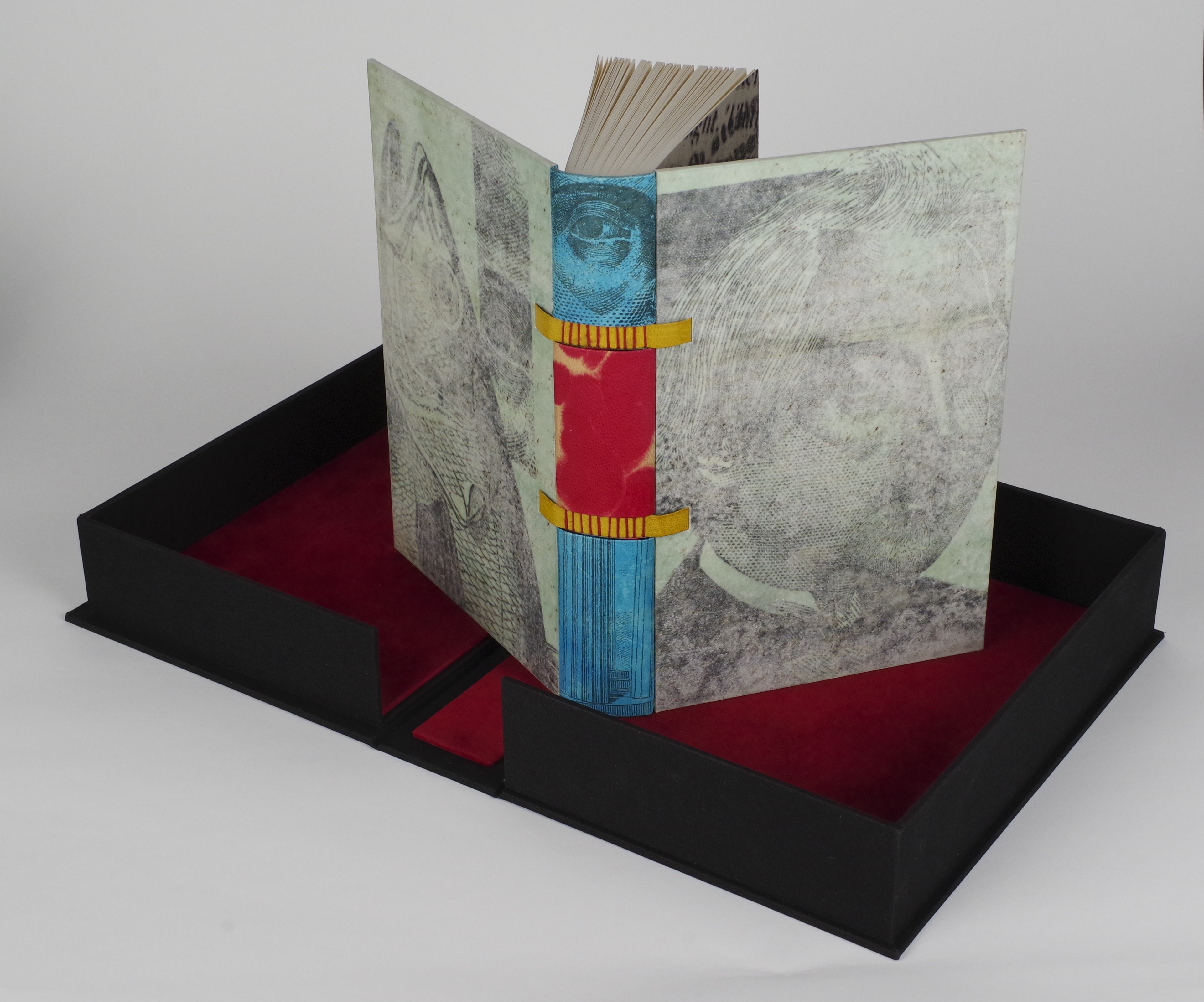
The boards are covered in palimpsest parchment mirroring the overlaying texts of poem and commentary in the book. More directly, the boards also refer to the first Canto where Shade tells us that “My picture book was at an early age / The painted parchment papering our cage". Old parchment was first cleaned with the original writing being removed using an aqueous technique before being re-stretched and allowed to dry. After drying the parchment was further treated to become semi-transparent though elements of the original text can still be made out. Under the parchment to the front board a series of three heads are spliced, superimposed and collaged. The idea for this came for Shade’s inventory of personal dislikes which lists and superimposes seemingly incongruous elements onto each other: “Primitivist folk-masks; progressive schools; / Music in supermarkets; swimming pools; / Brutes. bores, class-conscious Philistines, Freud, Marx / Fake thinkers, puffed-up poets, frauds and sharks.”
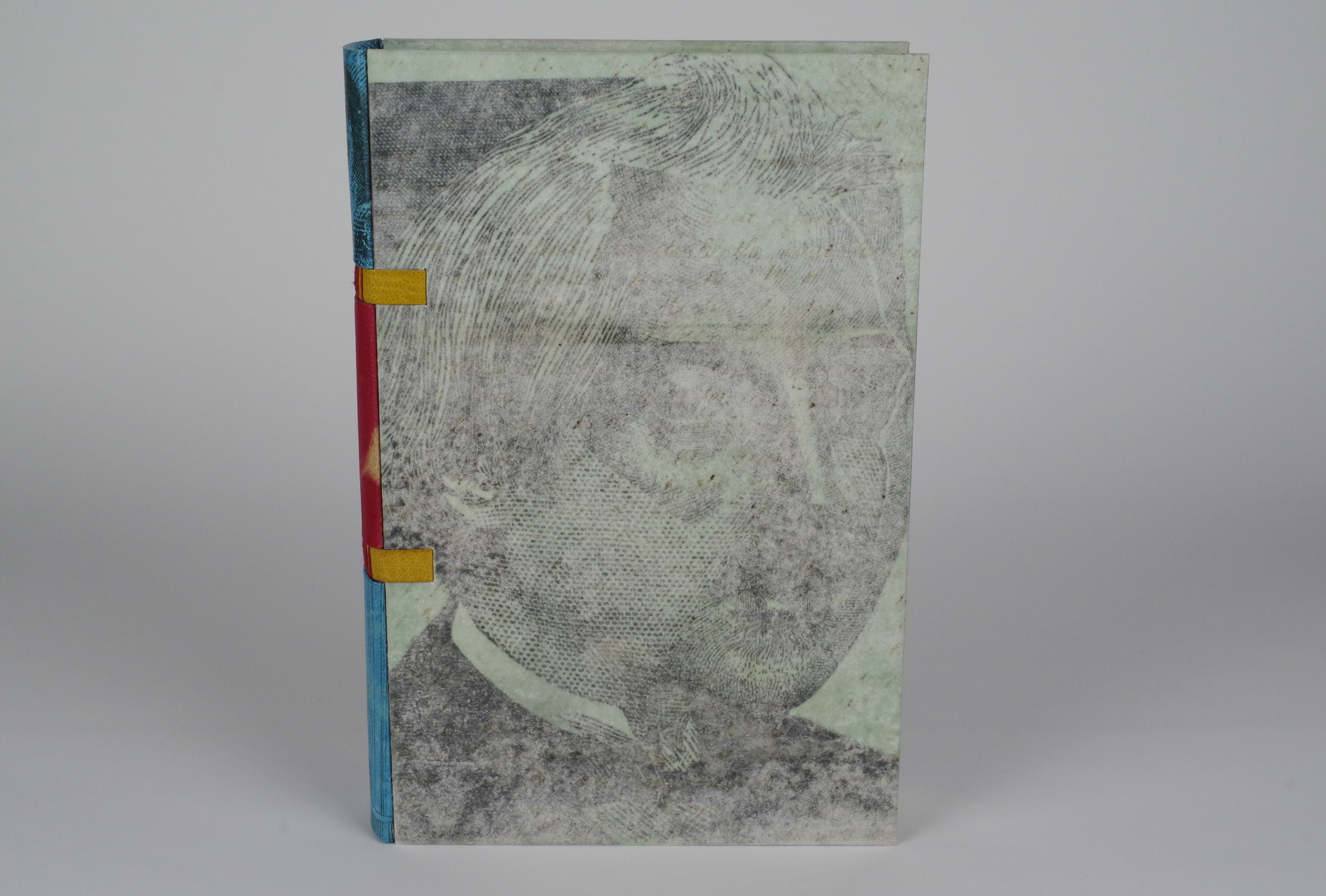
At the same time the idea of the collage points to the principal themes of identity and authorship in the novel. Shakespeare (again!) and two other faces form a composite head or mask. The composite head, different voices and profiles become distorted and manipulated. Ghost-like they disappear and re-appear through the parchment. The back board, again covered in parchment has an eye, Shakespeare’s, partially obscured by a fish, as if spying through a small aperture on something or someone. While referring to the wider theme of spying and observing in the book this theme was inspired by two lines from the third Canto: "And to fulfill the fish wish of the womb, / A school of Freudians headed for the tomb."
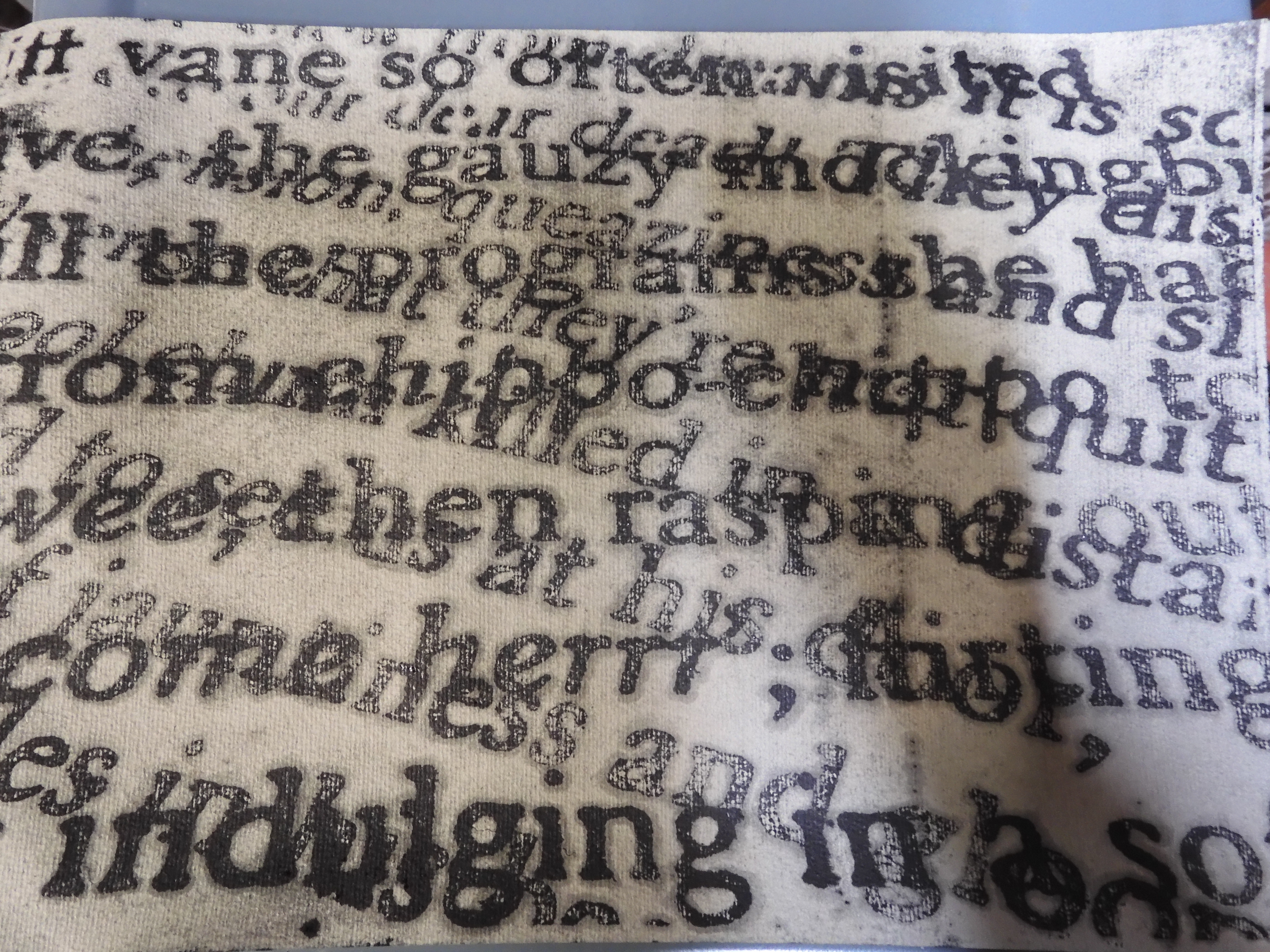
The hand printed collages to both the front and back boards were hand-coloured before covering in the palimpsest parchment lending a subtle degree of depth. The text block has been secondary sewn with red linen thread over yellow slips laced into the boards. Both structural and decorative, the yellow slips link the five elements of the binding with the red thread creating a constant within the text block. The end papers are hand printed with an off-set technique. Distorted, superimposed text with differing perspectives criss-cross the muted grey paper creating tension and imbalance. The head, tail and fore edge of the text block have been hand-tinted.