
Describing the king’s escape from Zembla, Kinbote (in VN’s novel Pale Fire, 1962, Shade’s mad commentator who imagines that he is Charles the Beloved, the last self-exiled king of Zembla) mentions lazy Garh, the farmer's daughter who shows to the king the shortest way to the pass:
The gnarled farmer and his plump wife who, like personages in an old tedious tale offered the drenched fugitive a welcome shelter, mistook him for an eccentric camper who had got detached from his group. He was allowed to dry himself in a warm kitchen where he was given a fairy-tale meal of bread and cheese, and a bowl of mountain mead. His feelings (gratitude, exhaustion, pleasant warmth, drowsiness and so on) were too obvious to need description. A fire of larch roots crackled in the stove, and all the shadows of his lost kingdom gathered to play around his rocking chair as he dozed off between that blaze and the tremulous light of a little earthenware cresset, a beaked affair rather like a Roman lamp, hanging above a shelf where poor beady baubles and bits of nacre became microscopic soldiers swarming in desperate battle. He woke up with a crimp in the neck at the first full cowbell of dawn, found his host outside, in a damp corner consigned to the humble needs of nature, and bade the good grunter (mountain farmer) show him the shortest way to the pass. "I'll rouse lazy Garh," said the farmer.
A rude staircase led up to a loft. The farmer placed his gnarled hand on the gnarled balustrade and directed toward the upper darkness a guttural call: "Garh! Garh!" Although given to both sexes, the name is, strictly speaking, a masculine one, and the King expected to see emerge from the loft a bare-kneed mountain lad like a tawny angel. Instead there appeared a disheveled young hussy wearing only a man's shirt that came down to her pink shins and an oversized pair of brogues. A moment later, as in a transformation act, she reappeared, her yellow hair still hanging lank and loose, but the dirty shirt replaced by a dirty pullover, and her legs sheathed in corduroy pants. She was told to conduct the stranger to a spot from which he could easily reach the pass. A sleepy and sullen expression blurred whatever appeal her snub-nosed round face might have had for the local shepherds; but she complied readily enough with her father's wish. His wife was crooning an ancient song as she busied herself with pot and pan.
Before leaving, the King asked his host, whose name was Griff, to accept an old gold piece he chanced to have in his pocket, the only money he possessed. Griff vigorously refused and, still remonstrating, started the laborious business of unlocking and unbolting two or three heavy doors. The King glanced at the old woman, received a wink of approval, and put the muted ducat on the mantelpiece, next to a violet seashell against which was propped a color print representing an elegant guardsman with his bare-shouldered wife - Karl the Beloved, as he was twenty odd years before, and his young queen, an angry young virgin with coal-black hair and ice-blue eyes.
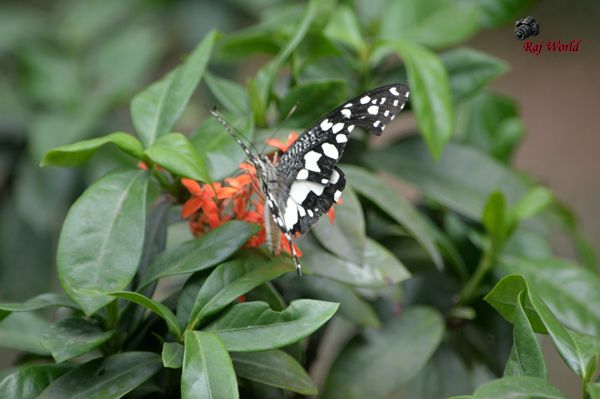
The stars had just faded. He followed the girl and a happy sheepdog up the overgrown trail that glistened with the ruby dew in the theatrical light of an alpine dawn. The very air seemed tinted and glazed. A sepulchral chill emanated from the sheer cliff along which the trail ascended; but on the opposite precipitous side, here and there between the tops of fir trees growing below, gossamer gleams of sunlight were beginning to weave patterns of warmth. At the next turning this warmth enveloped the fugitive, and a black butterfly came dancing down a pebbly rake. The path narrowed still more and gradually deteriorated amidst a jumble of boulders. The girl pointed to the slopes beyond it. He nodded. "Now go home," he said. "I shall rest here and then continue alone."
He sank down on the grass near a patch of matted elfinwood and inhaled the bright air. The panting dog lay down at his feet. Garh smiled for the first time. Zemblan mountain girls are as a rule mere mechanisms of haphazard lust, and Garh was no exception. As soon as she had settled beside him, she bent over and pulled over and off her tousled head the thick gray sweater, revealing her naked back and blancmange breasts, and flooded her embarrassed companion with ail the acridity of ungroomed womanhood. She was about to proceed with her stripping but he stopped her with a gesture and got up. He thanked her for all her kindness. He patted the innocent dog; and without turning once, with a springy step, the King started to walk up the turfy incline. (note to Line 149)
The King hopes to see emerge from the loft a bare-kneed mountain lad like a tawny angel. In The Theosophical Glossary Helena Blavatsky (a Russian and American mystic, the co-founder of the Theosophical Society, born Helena von Hahn, 1831-1891) says that the name Orpheus (of a legendary musician and prophet) means the "tawny one:"
Orpheus (Gr.). Lit., the “tawny one”. Mythology makes him the son of Æager and the muse Calliope. Esoteric tradition identifies him with Arjuna, the son of Indra and the disciple of Krishna. He went round the world teaching the nations wisdom and sciences, and establishing mysteries. The very story of his losing his Eurydice and finding her in the underworld or Hades, is another point of resemblance with the story of Arjuna, who goes to Pâtâla (Hades or hell, but in reality the Antipodes or America) and finds there and marries Ulupi, the daughter of the Nâga king. This is as suggestive as the fact that he was considered dark in complexion even by the Greeks, who were never very fair-skinned themselves.
Orphic Mysteries or Orphica (Gr.). These followed, but differed greatly from, the mysteries of Bacchus. The system of Orpheus is one of the purest morality and of severe asceticism. The theology taught by him is again purely Indian. With him the divine Essence is inseparable from whatever is in the infinite universe, all forms being concealed from all eternity in It. At determined periods these forms are manifested from the divine Essence or manifest themselves. Thus through this law of emanation (or evolution) all things participate in this Essence, and are parts and members instinct with divine nature, which is omnipresent. All things having proceeded from, must necessarily return into it; and therefore, innumerable transmigrations or reincarnations and purifications are needed before this final consummation can take place. This is pure Vedânta philosophy. Again, the Orphic Brotherhood ate no animal food and wore white linen garments, and had many ceremonies like those of the Brahmans.
Phanes (Gr.). One of the Orphic triad—Phanes, Chaos and Chronos. It was also the trinity of the Western people in the pre-Christian period.
In his commentary to Shade's poem Kinbote mentions an Orphic divinity:
Line 270: My dark Vanessa
It is so like the heart of a scholar in search of a fond name to pile a butterfly genus upon an Orphic divinity on top of the inevitable allusion to Vanhomrigh, Esther! In this connection a couple of lines from one of Swift's poems (which in these backwoods I cannot locate) have stuck in my memory:
When, lo! Vanessa in her bloom
Advanced like Atalanta's star
As to the Vanessa butterfly, it will reappear in lines 993-995 (to which see note). Shade used to say that its Old English name was The Red Admirable, later degraded to The Red Admiral. It is one of the few butterflies I happen to be familiar with. Zemblans call it harvalda (the heraldic one) possibly because a recognizable figure of it is borne in the escutcheon of the Dukes of Payn. In the autumn of certain years it used to occur rather commonly in the Palace Gardens and visit the Michaelmas daisies in company with a day-flying moth. I have seen The Red Admirable feasting on oozy plums and, once, on a dead rabbit. It is a most frolicsome fly. An almost tame specimen of it was the last natural object John Shade pointed out to me as he walked to his doom (see, see now, my note to lines 993-995).
I notice a whiff of Swift in some of my notes. I too am a desponder in my nature, an uneasy, peevish, and suspicious man, although I have my moments of volatility and fou rire.
Kinbote's moments of volatility and fou rire bring to mind institutskie furirchiki v podushku (school-dormitory habit of having the giggles in bed) of Hermann's wife Lydia in VN's novel Otchayanie ("Despair," 1934):
Но теперь мне вдруг стало грустно, – по-настоящему. Я вспомнил вдруг так живо этот кактус на балконе, эти синие наши комнаты, эту квартиру в новом доме, выдержанную в современном коробочно-обжулю-пространство-безфинтифлюшечном стиле, – и на фоне моей аккуратности и чистоты ералаш, который всюду сеяла Лида, сладкий, вульгарный запах ее духов. Но ее недостатки, ее святая тупость, институтские фурирчики в подушку не сердили меня. Мы никогда не ссорились, я никогда не сделал ей ни одного замечания, – какую бы глупость она на людях ни сморозила, как бы дурно она ни оделась. Не разбиралась, бедная, в оттенках: ей казалось, что, если все одного цвета, цель достигнута, гармония полная, и поэтому она могла нацепить изумрудно-зеленую фетровую шляпу при платье оливковом или нильской воды. Любила, чтобы все «повторялось», – если кушак черный, то уже непременно какой-нибудь черный кантик или черный бантик на шее. В первые годы нашего брака она носила белье со швейцарским шитьем. Ей ничего не стоило к воздушному платью надеть плотные осенние башмаки, – нет, тайны гармонии ей были совершенно недоступны, и с этим связывалась необычайная ее безалаберность, неряшливость. Неряшливость сказывалась в самой ее походке: мгновенно стаптывала каблук на левой ноге. Страшно было заглянуть в ящик комода, – там кишели, свившись в клубок, тряпочки, ленточки, куски материи, ее паспорт, обрезок молью подъеденного меха, еще какие-то анахронизмы, например дамские гетры – одним словом, Бог знает что. Частенько и в царство моих аккуратно сложенных вещей захаживал какой-нибудь грязный кружевной платочек или одинокий рваный чулок: чулки у нее рвались немедленно – словно сгорали на ее бойких икрах. В хозяйстве она не понимала ни аза, гостей принимала ужасно, к чаю почему-то подавалась в вазочке наломанная на кусочки плитка молочного шоколада, как в бедной провинциальной семье. Я иногда спрашивал себя, за что, собственно, ее люблю, – может быть, за теплый карий раек пушистых глаз, за естественную боковую волну в кое-как причесанных каштановых волосах, за круглые, подвижные плечи, а всего вернее – за ее любовь ко мне.
And now, all of a sudden I feel sad--the real thing, this time. I have just visualized, with shocking vividness, that cactus on the balcony, those blue rooms, that flat of ours in one of those newfangled houses built in the modern boxlike, space-cheating, let-us-have-no-nonsense style. And there, in my world of neatness and cleanliness, the disorder Lydia spread, the sweet vulgar tang of her perfume. But her faults, her innocent dullness, her school-dormitory habit of having the giggles in bed, did not really annoy me. We never quarreled, never did I make a single complaint to her--no matter what piffle she spouted in public, or how tastelessly she dressed. She was anything but good at distinguishing shades, poor soul. She thought it just right if the main colors matched, this satisfying thoroughly her sense of tone, and so she would flaunt a hat of grass-green felt with an olive-green or eau de Nil dress. She liked everything "to be echoed." If, for instance, the sash was black, then she found it absolutely necessary to have some little black fringe or little black frill about her throat. In the first years of our married life she used to wear linen with Swiss embroidery. She was perfectly capable of putting on a wispy frock together with thick autumn shoes; no, decidedly, she had not the faintest notion of the mysteries of harmony, and this was connected with her being wretchedly untidy. Her slovenliness showed in the very way she walked, for she had a knack of treading her left shoe down at heel. It made me shudder to glance into her chest of drawers where there writhed higgledy-piggledy a farrago of rags, ribbons, bits of silk, her passport, a wilted tulip, some pieces of moth-eaten fur, sundry anachronisms (gaiters for example, as worn by girls ages ago) and suchlike impossible rubbish. Quite often, too, there would dribble into the cosmos of my beautifully arranged things some tiny and very dirty lace handkerchief or a solitary stocking, torn. Stockings seemed positively to burn on those brisk calves of hers. Not a jot did she understand of household matters. Her receptions were dreadful. There would always be, in a little dish, broken bars of milk chocolate as offered in poor provincial families. I sometimes used to ask myself, what on earth did I love her for? Maybe for the warm hazel iris of her fluffy eyes, or for the natural side-wave of her brown hair, done anyhow, or again for that movement of her plump shoulders. But probably the truth was that I loved her because she loved me. (Chapter II)
The narrator and main character in Despair, Hermann murders Felix, a tramp whom Hermann believes to be his perfect double. Shade's murderer, Gradus (a member of the Shadows, a regicidal organization) is Kinbote's double. In Helena Blavatsky's Theosophical Glossary there is the following entry:
Nahbkoon (Eg.). The god who unites the “doubles”, a mystical term referring to the human disembodied “principles”.
Kinbote's tawny angel brings to mind "But with a touch of tawny in the shade," a line in Canto Three of Shade's poem:
Time means succession, and succession, change:
Hence timelessness is bound to disarrange
Schedules of sentiment. We give advice
To widower. He has been married twice:
He meets his wives; both loved, both loving, both
Jealous of one another. Time means growth.
And growth means nothing in Elysian life.
Fondling a changeless child, the flax-haired wife
Grieves on the brink of a remembered pond
Full of a dreamy sky. And, also blond,
But with a touch of tawny in the shade,
Feet up, knees clasped, on a stone balustrade
The other sits and raises a moist gaze
Toward the blue impenetrable haze.
How to begin? Which first to kiss? What toy
To give the babe? Does that small solemn boy
Know of the head-on crash which on a wild
March night killed both the mother and the child?
And she, the second love, with instep bare
In ballerina black, why does she wear
The earrings from the other's jewel case?
And why does she avert her fierce young face? (ll. 567-588)
Butterfly, Garh Panchkot